
How to Write a Capstone Project: Complete Guide for Any Major


TL;DR — Key Takeaways
- A capstone project demonstrates applied learning — it’s not about generating new knowledge, it’s about showing what you can do with what you’ve learned.
- There are three universal formats: research, applied/problem-based, and portfolio. Most students choose the wrong one — pick based on your career goals, not prestige.
- Write the introduction last. After you know your findings, the introduction becomes straightforward.
- The IRB (Institutional Review Board) approval process is the hidden bottleneck for research capstones — it can add 3-6 months.
- Recommendations must trace back to your findings. This is the second-most-common reason capstones fail evaluation.
# How to Write a Capstone Project: The Complete Guide for Any Major
You’ve been assigned a capstone project. Maybe it’s a nursing student’s evidence-based practice project. Maybe it’s an IT student building a software prototype. Or maybe it’s a business student analyzing a real company’s strategic challenges. Whatever your major, the capstone is the culminating project of your degree — and it’s usually the last thing you do before graduation.
So here’s the question that probably keeps you up at night: how to write a capstone project that actually works?
The answer isn’t complicated, but it is specific. And that’s exactly what this guide covers. No fluff, no generic advice — just a clear, step-by-step roadmap that actually works across any major.
What Is a Capstone Project (and Why Does It Matter)?
A capstone project is a culminating academic assignment that lets you demonstrate everything you’ve learned throughout your degree program. Think of it as your academic “swan song” — a chance to show that you’re ready to graduate and move into the real world.
Here’s what makes a capstone different from regular coursework: regular classes assess what you know. A capstone assesses what you can do with what you know. It’s not about regurgitating textbook answers. It’s about solving a real problem, analyzing a real situation, or building something real.
And that’s why professors take capstones seriously. They’re often the last chance to evaluate your readiness for your field. In nursing, it’s about patient outcomes. In IT, it’s about working software. In business, it’s about strategic thinking. In education, it’s about improving how people learn.
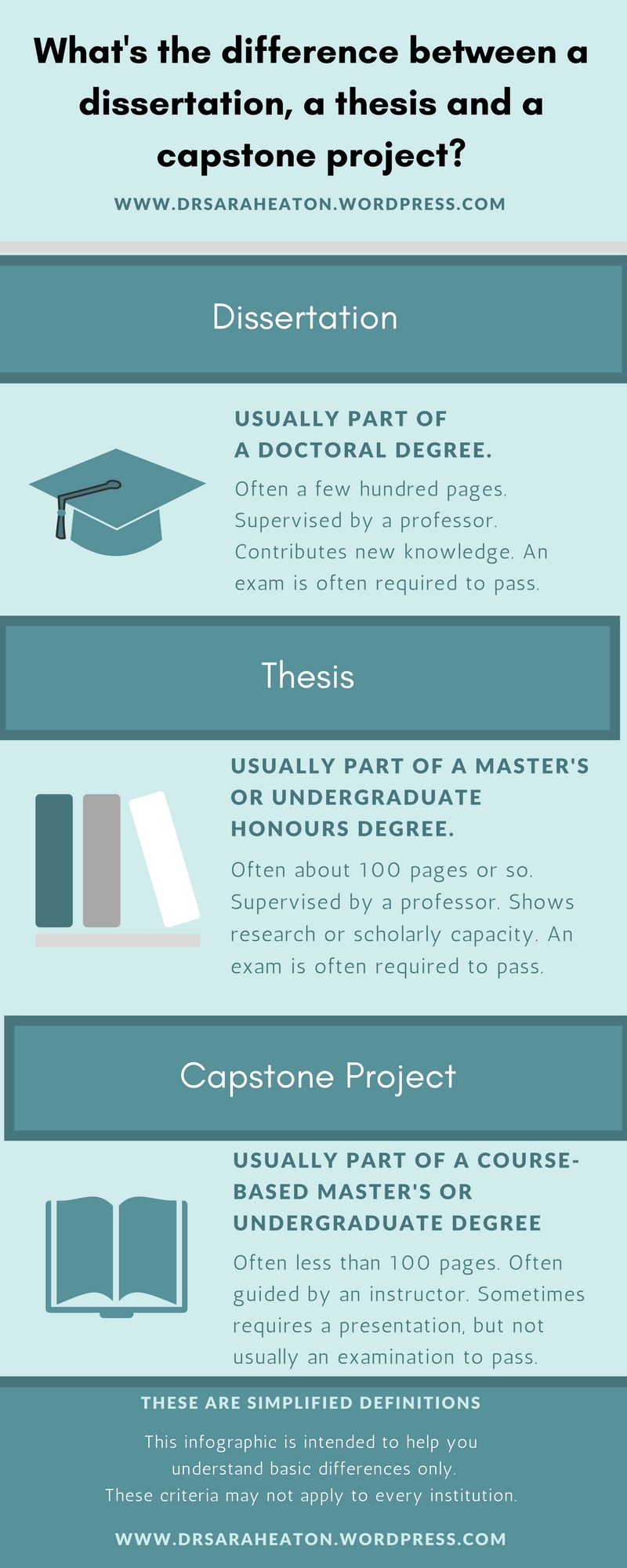 Source: Dr. Sarah Elaine Eaton, University of Calgary
As Dr. Sarah Elaine Eaton from the University of Calgary explains, a capstone is distinct from both a thesis and a dissertation. A thesis is about demonstrating mastery of a subject through research. A dissertation is about generating new knowledge for the field. **A capstone is about demonstrating applied learning.** You’re showing that you can take theory and make it work in the real world.
If you’re a nursing student, you might want to see a nursing capstone example for context: https://essays-panda.com/how-to-write-a-nursing-capstone-paper-picot-framework. Nursing students usually work on evidence-based practice projects that address real clinical problems.
Types of Capstone Projects
Every capstone program somewhere around the world uses one of three formats. Understanding which one applies to you is the single most important thing you’ll do before writing a single word.
1. Research Capstone
This is the closest to a traditional research paper. You identify a research question, collect data, analyze results, and draw conclusions. It looks like a scholarly article.
Best for: Students planning to pursue a PhD or continue research at the doctoral level.
Pros: Develops deep research skills. Can lead to publication.
Cons: Longest timeline. IRB approval adds 3-6 months. Requires statistical analysis skills.
2. Applied (Problem-Based) Capstone
This format focuses on solving a real-world problem. You identify a practical problem, apply evidence-based solutions, and propose actionable recommendations. You’re answering “what should we do about it?” rather than “what do we know?”
Best for: Students heading straight into professional practice. This is the default for most nursing (DNP), education (EdD), and business programs.
Pros: Real-world impact. Faster timeline (no IRB for non-research applications). Deliverable your employer can actually use.
Cons: Less “academic rigor” appearance (though it’s academically rigorous — just applied).
What we recommend: Unless you’re pursuing a PhD, choose the applied format. It saves you 6-8 months of IRB approval time and produces a deliverable you can showcase to potential employers.
If you’re a nursing student looking at a DNP capstone proposal specifically: https://essays-panda.com/how-to-write-a-dnp-capstone-project-proposal-structure-picot-alignment-and-timeline. DNP students typically choose the applied format because it aligns with their practice-focused doctoral goals.
3. Portfolio Capstone
This is your most straightforward option. You curate selected assignments from your degree, write a reflective introduction, and explain how each piece demonstrates your learning outcomes. It’s essentially a well-organized academic tour of your work.
Best for: Students in programs without a major project requirement.
Pros: Fastest to complete. Leverages work you’ve already done.
Cons: Least impressive format. Limited to programs that allow it.
| Format | Timeline | Output | Best For |
|---|---|---|---|
| Research | 12-24 months | Research paper / published study | PhD-track students |
| Applied | 6-12 months | Solution brief / implementation plan | Direct-to-practice students |
| Portfolio | 3-6 months | Curated collection + reflection | Programs without major project |
## Universal Chapter Structure
Here’s the secret that most capstone guides don’t tell you: every capstone follows the same five-chapter structure, regardless of your major. Once you understand the universal skeleton, you can fill in discipline-specific content with confidence.
Chapter 1: Introduction
This chapter sets up the problem or situation. It includes the background, problem statement, purpose, research questions (if applicable), and significance. Keep it focused — it should be short enough that a reader can understand your project after one read.
Chapter 2: Literature Review
This chapter synthesizes existing research related to your topic. It’s not a list of summaries — it’s a critical analysis showing where the literature supports your work and where it leaves gaps. For a deeper dive into this chapter, our literature review writing guide for graduate students covers the mechanics: https://essays-panda.com/literature-review-graduate-thesis-dissertation.
Chapter 3: Methodology
This chapter explains how you conducted your project. The specifics vary wildly by discipline, but the purpose is always the same: let someone else replicate your work based on your description.
Chapter 4: Findings / Results
This chapter presents what you found. No interpretation — just the facts. Save the discussion for Chapter 5.
Chapter 5: Discussion and Recommendations
This is where you connect your findings to real-world implications. It’s the chapter that separates a good capstone from a great one.
Crucial insight: Most students write the introduction first. Then they write the methodology. Then they write the findings. Then they come back and rewrite the introduction twice because their findings changed their original framing.
What we recommend: Write the introduction last. After you’ve collected data or completed your project, the introduction becomes straightforward. You’ll know exactly what problem you solved and why it matters.
Major-Specific Variations
This is where most capstone guides stop — and where they become useless. Here’s how the universal five-chapter structure actually looks across different disciplines.
| Chapter | Business | Nursing | IT / CS | Education | Engineering |
|---|---|---|---|---|---|
| Ch1: Introduction | Case study context, organizational problem | Evidence-based practice problem, clinical gap | System problem statement, user needs | Curriculum need, learning gap | Design problem, engineering constraints |
| Ch2: Literature Review | Business theories, competitor analysis, case literature | EBP frameworks, clinical guidelines, evidence synthesis | Technical literature, system architecture reviews, security studies | Learning theories, pedagogical research, curriculum studies | Design principles, materials science, engineering standards |
| Ch3: Methodology | Case study methodology, qualitative analysis | Evidence-based practice framework, implementation plan | Agile development methodology, testing protocols | Curriculum design framework, pilot implementation | Design methodology, prototyping process, testing |
| Ch4: Findings | Case study findings, organizational insights | Implementation outcomes, patient data | Prototype test results, performance metrics | Pilot implementation data, student outcomes | Design performance metrics, test results |
| Ch5: Discussion & Recommendations | Strategic recommendations, business implications | Evidence-based practice recommendations, clinical guidelines | Deployment recommendations, system optimization | Curriculum implementation recommendations | Design optimization, future work |
See how the skeleton stays the same while the content shifts? Chapter 1 always introduces a problem. Chapter 2 always reviews literature. Chapter 3 always explains your approach. But *what* constitutes “literature” and *what* constitutes “findings” varies dramatically.
For IT students building a software prototype, Chapter 3 is your development methodology (agile, waterfall, testing protocols). Chapter 4 is your test results. Chapter 5 is your deployment recommendations.
For business students doing a case study, Chapter 3 is your case selection rationale. Chapter 4 is your analysis. Chapter 5 is your strategic recommendations for the organization.
For nursing students, Chapter 2 is your evidence-based practice framework. Chapter 3 is your implementation plan. Chapter 5 is your clinical recommendations.
What we recommend: Read a capstone project example from your specific discipline before writing. Our nursing capstone example shows exactly how the evidence-based practice structure works: https://essays-panda.com/how-to-write-a-nursing-capstone-paper-picot-framework. Your discipline probably has similar examples online — search for “[your major] capstone project example PDF.”
If you’re still brainstorming what topic to choose, our list of 110+ capstone project ideas covers multiple disciplines: https://essays-panda.com/capstone-project-ideas-nursing-business-2026.
Capstone Timeline Planning
Here’s a concrete, Month 1 → Month 6 timeline you can actually follow. This assumes a six-month timeline, which is standard for most programs. Adjust proportionally if your program uses a different schedule.
| Month | Focus | Key Milestones |
|---|---|---|
| Month 1 | Topic Selection & Literature Review Planning | • Conduct preliminary literature search • Select and refine your topic • Meet with faculty advisor • Draft proposal outline |
| Month 2 | Literature Review & IRB Application | • Complete literature review draft • Submit IRB/QI application (if research format) • Begin methodology section • Identify data sources |
| Month 3 | Data Collection / Prototype / Case Research | • Collect data OR build prototype OR conduct case study • Document methodology • Start preliminary findings |
| Month 4 | Analysis & Results Writing | • Analyze data OR test prototype OR synthesize case findings • Write findings/results chapter • Begin discussion framework |
| Month 5 | Discussion, Recommendations & Revision | • Write discussion and recommendations • Ensure recommendations trace back to findings • Revise entire document • Format according to guidelines |
| Month 6 | Defense Preparation & Final Submission | • Prepare defense presentation • Conduct mock defense • Final formatting check • Submit capstone |
### Why This Timeline Works
Notice that Month 2 includes IRB submission. This is the hidden bottleneck. Students routinely underestimate IRB timelines. It can take 3-6 months of back-and-forth with the review board. If you submit in Month 2, you’ll still have time to collect data in Months 3-4 even if your IRB approval comes late.
The recommendation to write the introduction last (covered above) is baked into this timeline: you don’t finalize Chapter 1 until Month 5, after Months 3-4 have given you actual findings to work with.
## How to Write a Capstone Proposal
Your capstone proposal is the blueprint for everything that follows. It’s what you submit to your advisor and IRB to get approval to begin. A strong proposal looks like this:
1. Problem Statement (1-2 paragraphs)
What’s the problem? Why does it matter? This should be specific, not generic. “Students struggle with calculus” is weak. “First-year engineering students at state universities show a 40% failure rate in Calculus I, and existing tutoring interventions show no statistically significant improvement” is strong.
2. Literature Summary (2-3 paragraphs)
What does existing research say about this problem? Don’t do a full literature review here — this is a summary of the key studies that frame your project. Think of it as evidence that you’ve done the homework.
3. Methodology (2-3 paragraphs)
How will you approach the project? This is discipline-dependent, but the logic is universal:
- Research format: sampling strategy, data collection, analysis plan
- Applied format: implementation approach, evidence sources, evaluation criteria
- Portfolio format: portfolio selection criteria, reflection framework
4. Timeline (1 paragraph)
A rough schedule of major milestones. Your Month 1 → Month 6 timeline from above fits here.
5. Expected Outcomes (1-2 paragraphs)
What will your project produce? A research paper? A practical implementation plan? A portfolio with reflections? Be concrete.
Pro Tip
Your proposal doesn’t need to be perfect. It needs to be convincing. Your advisor wants to see that you’ve thought about feasibility. Your IRB wants to see that you understand ethical considerations (if applicable). Your reader wants to see that the project is scoped appropriately.
## Common Capstone Mistakes (and How to Avoid Them)
If you’ve been researching “how to write a capstone project” this far, you’ve probably heard a lot of advice. But here’s what actually matters — the specific mistakes that cause real students to fail evaluations, fail defenses, or get extended deadlines.
Mistake #1: Recommendations Don’t Trace Back to Findings
This is the second-most-common reason capstones fail evaluation. You collect data. You write findings. And then your recommendations say something completely unrelated.
The fix: Every recommendation must cite a specific finding. Use phrases like: “Based on Finding 3 (p. 45), we recommend…” or “The data in Table 2 directly supports Recommendation 2.” If a recommendation doesn’t have a finding citation, it shouldn’t be there.
Mistake #2: Treating the Literature Review as a Summary List
Many students write Chapter 2 like a list of summaries: “Author A said this. Author B said that.” This isn’t a literature review — it’s a reading log.
The fix: Synthesize. Group studies by theme, not by author. Show where the literature agrees, disagrees, and leaves gaps. Your literature review should end with a paragraph that says: “The literature doesn’t address [your specific problem], which is why this project is necessary.”
Mistake #3: Writing the Introduction First and Never Revising It
We mentioned this earlier, so let’s be blunt: if you write your introduction before you know your findings, you’re going to rewrite it. And that’s 12-20 hours of unnecessary work.
The fix: Draft a rough introduction during Month 1 (just enough to submit your proposal). Then wait. Finish Months 3-4 (data collection, analysis). Then write the real introduction in Month 5.
### Mistake #4: Ignoring Your Faculty Advisor
Capstones are supervised for a reason. Your advisor is there to prevent you from making the mistakes above. Don’t go rogue. Schedule regular meetings. Send drafts. Get feedback.
Mistake #5: Not Getting Your Work Critically Reviewed
Before you submit, someone needs to read your entire draft and tell you what’s wrong. If you don’t have a peer or mentor who can review it, consider getting professional academic writing feedback: https://essays-panda.com/academic-writing-feedback-how-to-use-professor-comments-effectively. A fresh pair of eyes catches structural problems you can’t see.
Preparing for Your Capstone Defense
If your program requires a defense (the oral presentation of your capstone before a committee), here’s how to prepare:
Step 1: Understand What the Committee Actually Cares About
They’re not looking to fail you. They’re looking to verify that you did the work and understand it. Questions usually fall into three categories:
- Methodological: “Why did you choose this sampling strategy?” “What were your limitations?”
- Interpretive: “How do your findings relate to the existing literature?” “What do your results mean in practice?”
- Reflective: “What would you do differently?” “How does this project align with your career goals?”
Step 2: Prepare a 20-Minute Presentation
Structure it like this:
- 3 min: Problem statement and why it matters
- 5 min: Literature review (brief — just the gaps your project addresses)
- 5 min: Methodology (what you did and why)
- 5 min: Findings (the key results, not everything)
- 2 min: Recommendations and future directions
Step 3: Anticipate Questions
Write down every possible question the committee could ask. Practice answering each one out loud. If you can’t answer a question, admit it — that’s what defenses are for. They want to see that you’re honest about what you know and don’t know.
## FAQ
How long should a capstone project be?
Typically 50-150 pages depending on your discipline and format. Research capstones tend toward the longer end (100-150 pages). Applied capstones are shorter (50-80 pages) because they focus on recommendations rather than statistical analysis. Always check your program’s specific requirements.
What is the difference between a capstone and a thesis?
A thesis demonstrates mastery of a subject through research — it’s about proving you understand the literature. A capstone demonstrates applied learning — it’s about solving a problem or creating something using what you’ve learned. A dissertation (at the doctoral level) generates new knowledge for the field. Dr. Sarah Elaine Eaton from the University of Calgary is the authoritative source on these distinctions.
Can I choose between research and applied formats?
It depends on your program. Many programs let you choose. If you’re heading into professional practice (not academia), the applied format is usually better. It saves time, produces a real-world deliverable, and doesn’t require IRB approval for non-research applications.
How much does a capstone cost at Essays-Panda?
We can’t give exact pricing without knowing your specific requirements. But our transparent calculator shows the exact cost upfront. Use it at https://essays-panda.com/prices before you start writing. Our service includes custom writing, revision support, and formatting assistance across all capstone disciplines.
What if I’m struggling with my literature review?
Our literature review writing guide breaks down the exact process for graduate students: https://essays-panda.com/literature-review-graduate-thesis-dissertation. The key is synthesis, not summary. Group studies by theme. Show patterns. Identify gaps.
Final Thoughts
Writing a capstone project is one of the most challenging academic experiences you’ll encounter. But it’s also the most rewarding — it’s your chance to show everything you’ve learned, solve a real problem, and graduate with confidence.
The key is to start with the right structure, follow a realistic timeline, and avoid the common mistakes covered here. Write the introduction last. Check your IRB timeline. Make sure your recommendations trace back to your findings. And get your work reviewed before submission.
If you need more specific guidance, our related guides cover discipline-specific examples and writing support:
- Nursing Capstone Paper: https://essays-panda.com/how-to-write-a-nursing-capstone-paper-picot-framework — nursing capstone example
- DNP Capstone Proposal: https://essays-panda.com/how-to-write-a-dnp-capstone-project-proposal-structure-picot-alignment-and-timeline — DNP capstone proposal
- 110+ Capstone Project Ideas: https://essays-panda.com/capstone-project-ideas-nursing-business-2026 — capstone project ideas list
- Literature Review Writing for Graduate Students: https://essays-panda.com/literature-review-graduate-thesis-dissertation — literature review writing guide
- Academic Writing Feedback: https://essays-panda.com/academic-writing-feedback-how-to-use-professor-comments-effectively — academic writing feedback
Get your capstone right. You’ve got this.